
What is Squeal?
Squeal is a high-pitched noise disturbance induced by rubbing surfaces. The denomination is originally associated with the automotive brake domain, but it is related to friction induced vibrations. Such phenomena include wind turbine brakes, milling chatter, polishing, actuator sliders, violin music, …
VibTwin knowledge is based on 18 years of experience of Guillaume Vermot des Roches since his Ph.D defended in 2011 on the subject. This non-linear phenomenon can be approached in various ways, and mainly relates to these two aspects:
Squeal Experimental Characterization
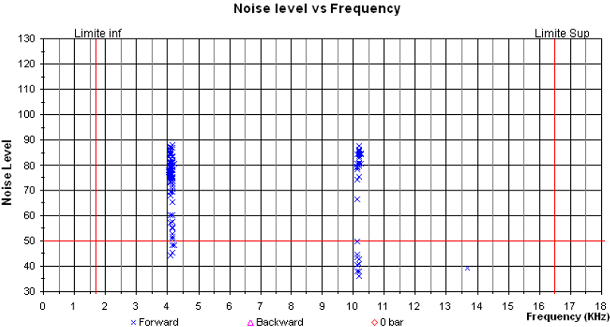
As squeal instabilities often happen late in the development process, measurements are often available, coming from qualification tests of dedicated characterization. The ability to finely extract Operational Deflection Shapes, associated with their frequency, depending on environment parameters, is critical to obtain an accurate view of the problem, test adequate solutions, and exploit the models.
Squeal Modelling and Sensitivity Studies
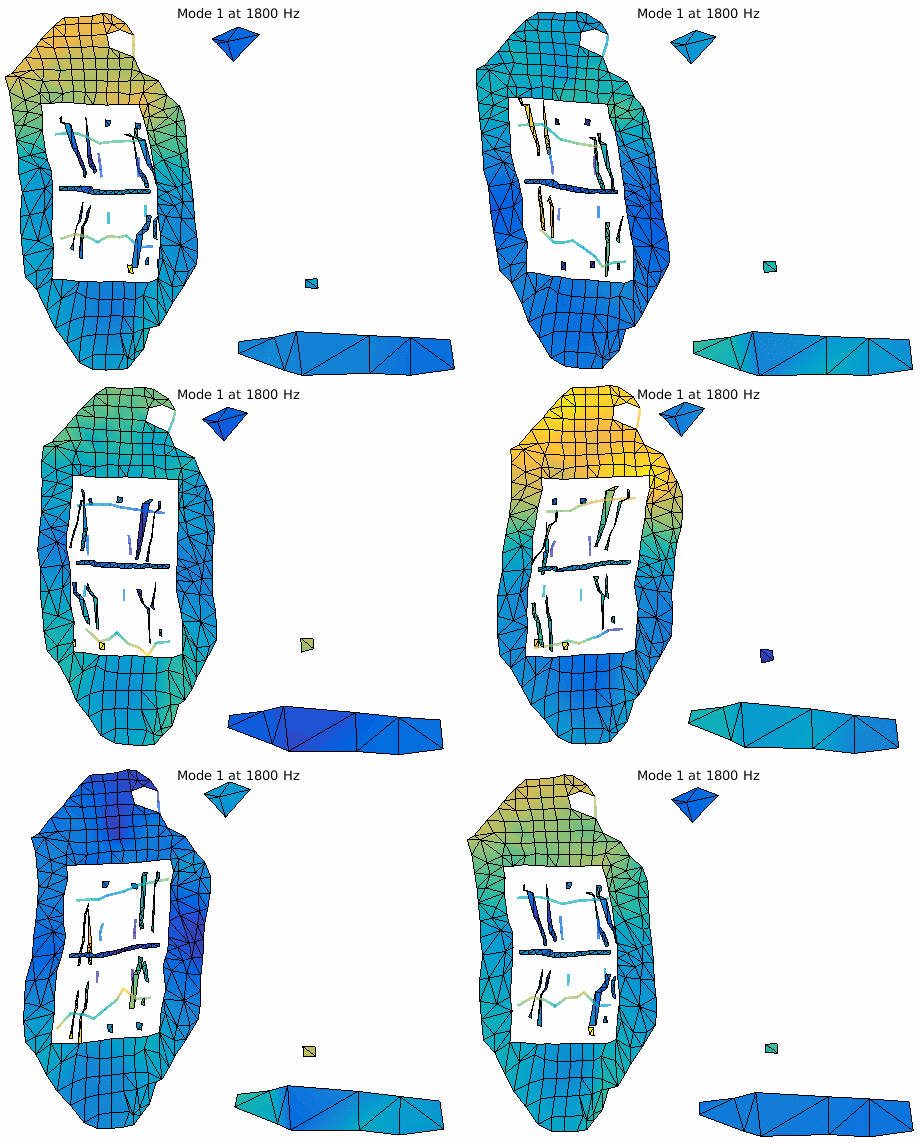
Squeal modelling requires the validation of structural dynamics models at high frequencies and with contact-friction interactions between various components. Verification and Validation are thus complex tasks. They require advanced tools to verify components and connections, and correlation tools to update the models. Expansion is a correlation tool providing error metrics and fields that enable efficient updating.

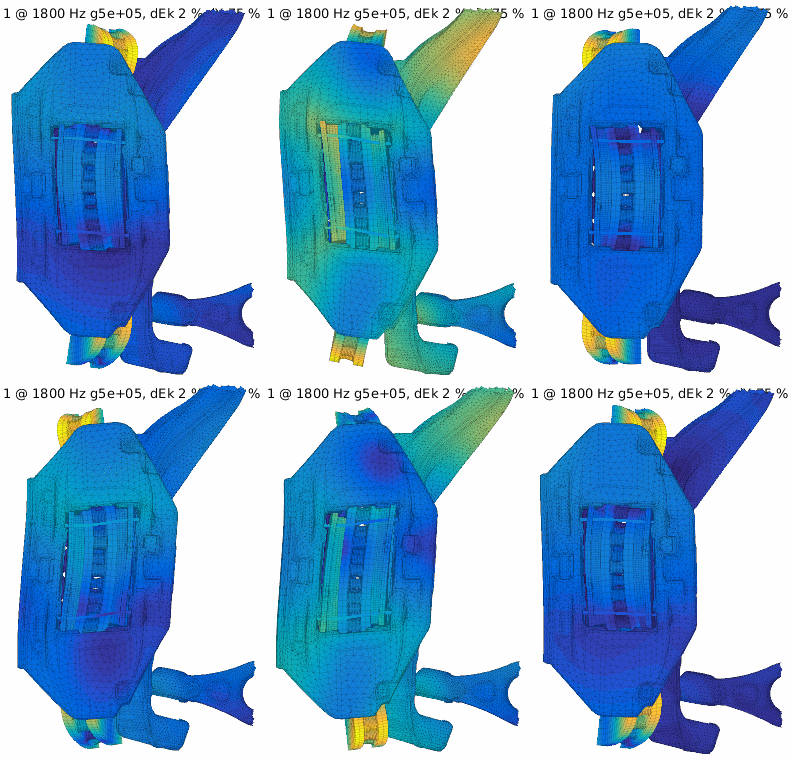
Sensitivity studies allow assessing unstable ranges and devise countermeasures. Component modes or couplings are commonly studied with adequate model order reductions methods such as the CMT and KnKt methods that allow large DoE thus refined insights.
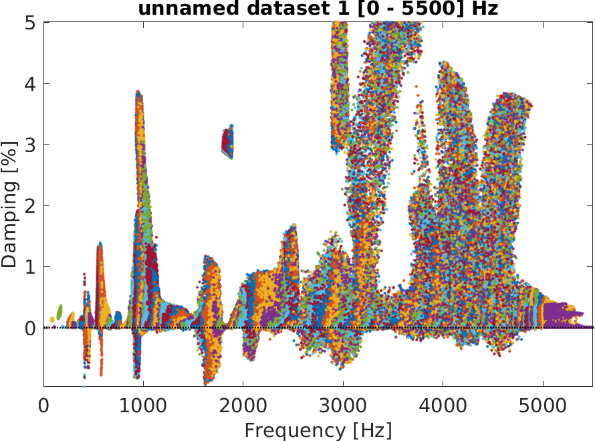
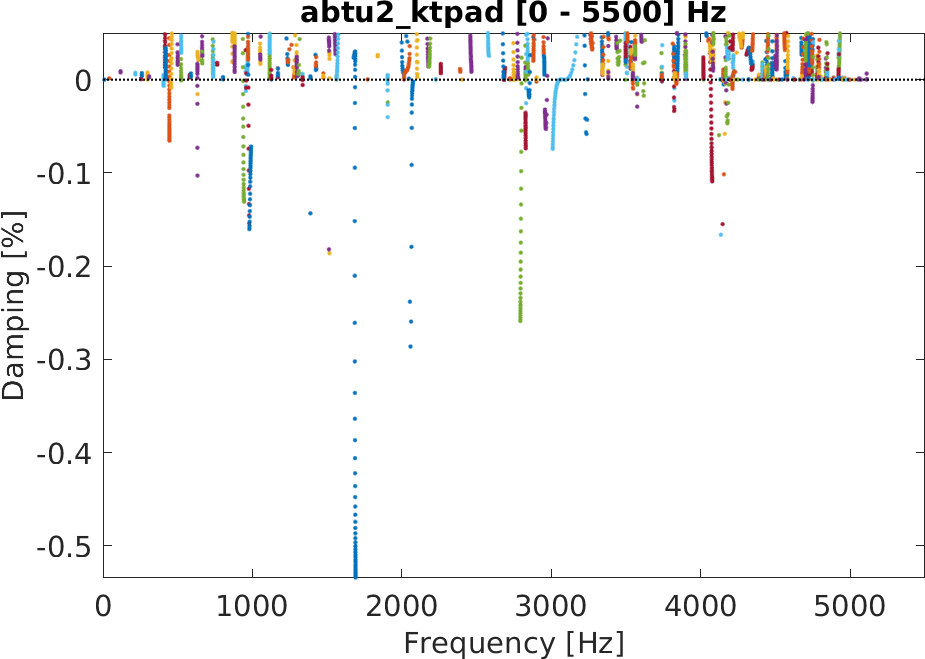
A global sensitivity study can feature over 10,000 design points and provide clues about unstable frequencies:
Using component free mode frequencies with the CMT method allow assessing local stability sensitivity to component level information and obtain design optimization clues:
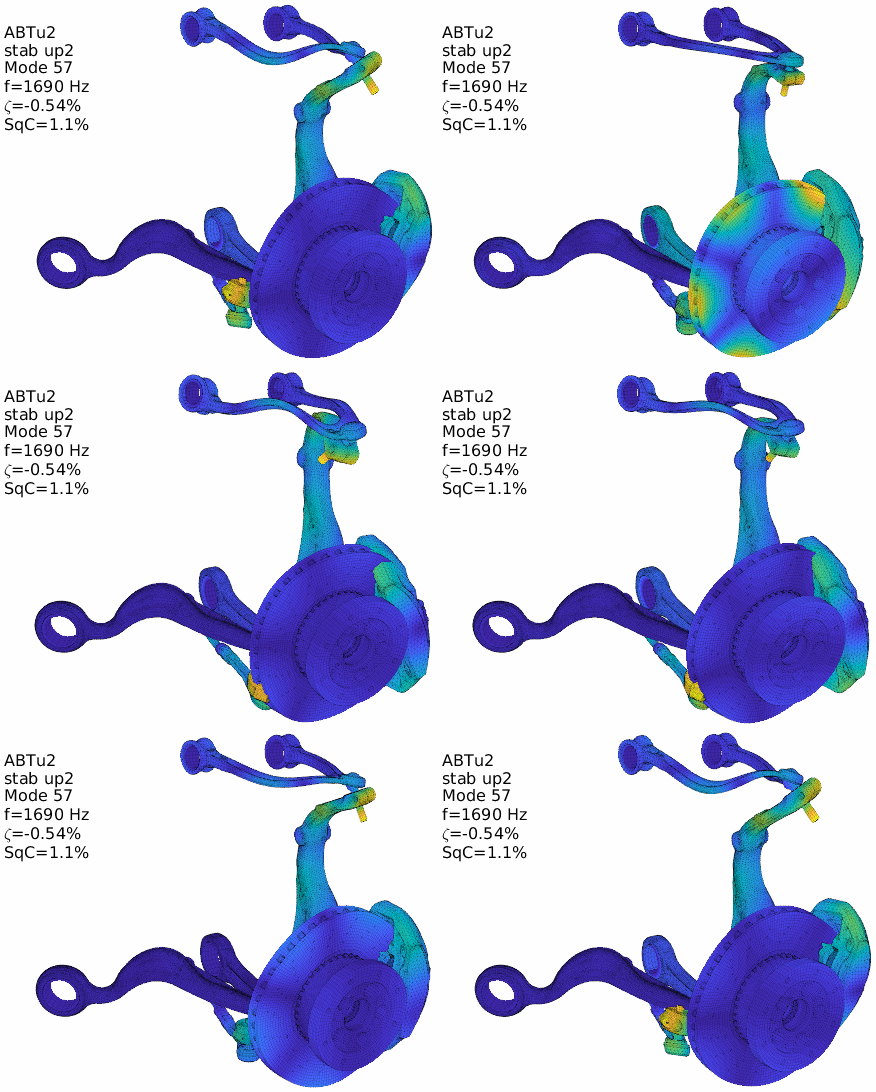
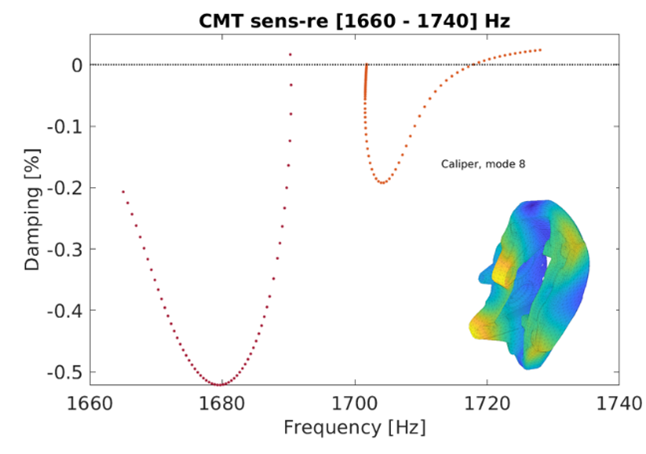
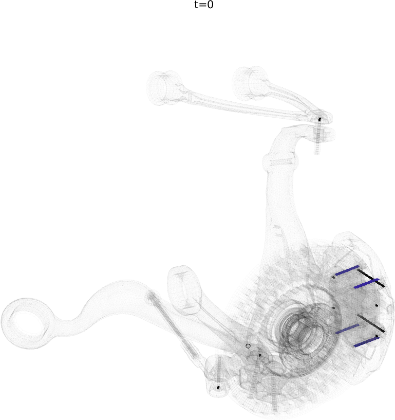
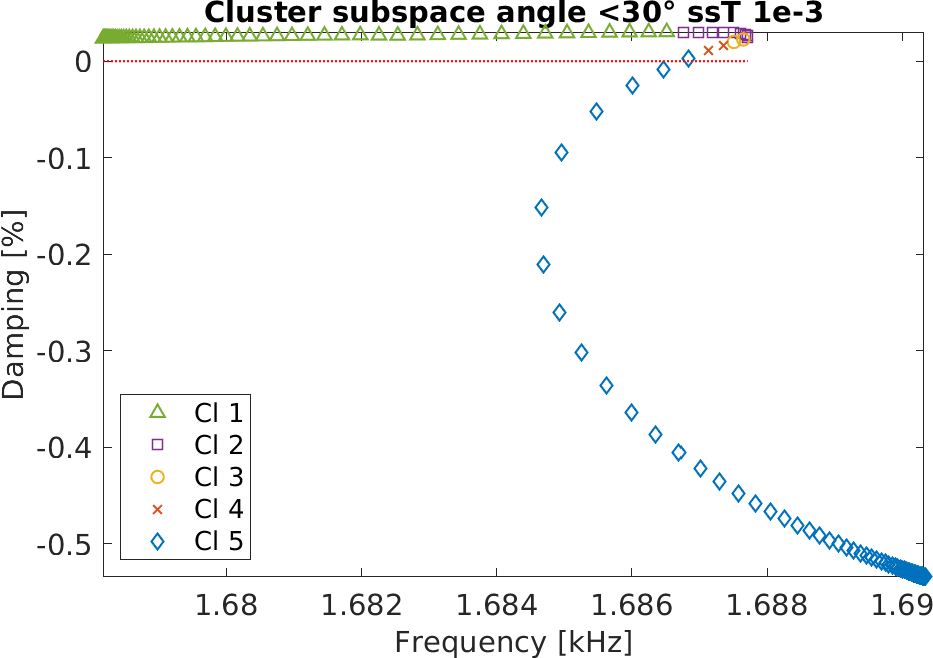
Coupling sensitivity using the KnKt method allows assessing stability to contact stiffness, friction levels, or assess potential opening effects in non-linear cycles:
Packaged Solutions
VibTwin proposes integrated squeal analysis packages including model verification and validation, squeal characterization, sensitivity studies and countermeasures suggestions.
In addition, the tools used by VibTwin in the packaged squeal studies can be organized in deployable applications based on SDT and its modules. Standard squeal studies can thus be integrated into industrial workflows.