The tools developed in the contact module for SDT contribute to one of VibTwin’s core expertise: the study of coupling in mechanical assemblies. Its main objective is twofold:
- Integrate contact and friction coupling solutions in SDT.
- Enable formulation conversions and import/export to external commercial codes.
The module covers the following capabilities
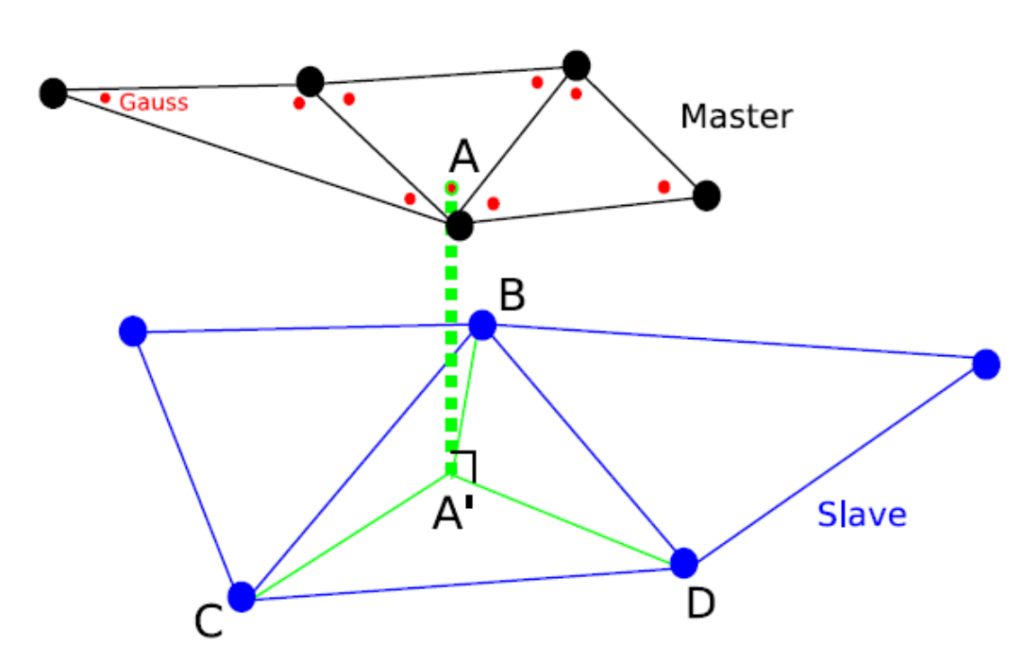
- SDT/FEMLink support for contact formulations. Import data from ABAQUS, ANSYS, flavors of NASTRAN, MSC.Marc, Creo, … Export capabilities mainly target ABAQUS. Dedicated updates to any external software can be made during projects as it is impossible to cover all cases by design.
- The generation of contact observation matrices for customized exploitation. Benefit from an efficient and scalable structural dynamics framework to develop your own procedures.

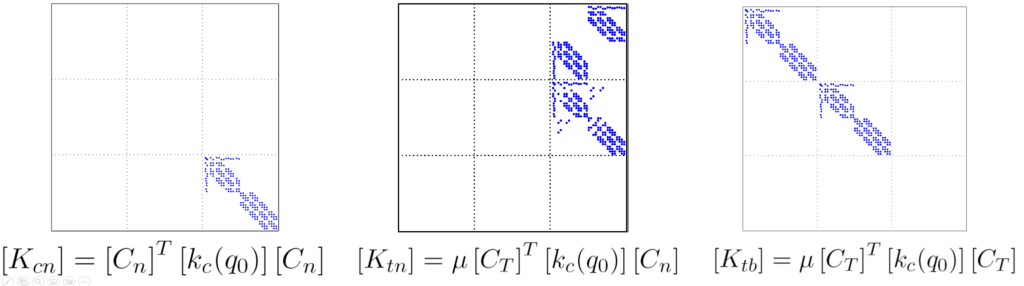
- The generation of tangent contact and friction coupling. Customizable model linearization from preload data for modal analysis and model order reduction.
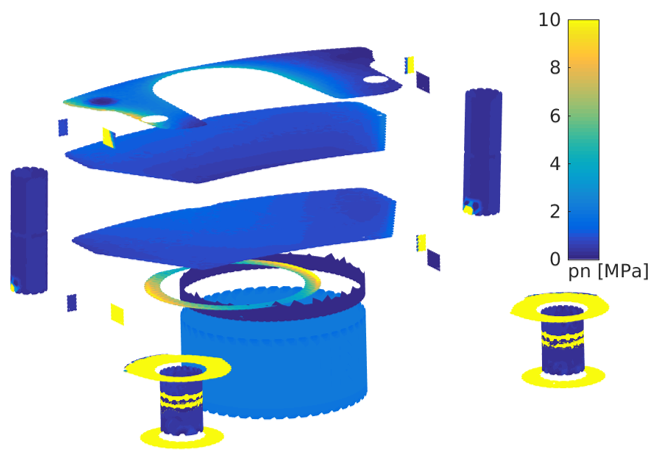
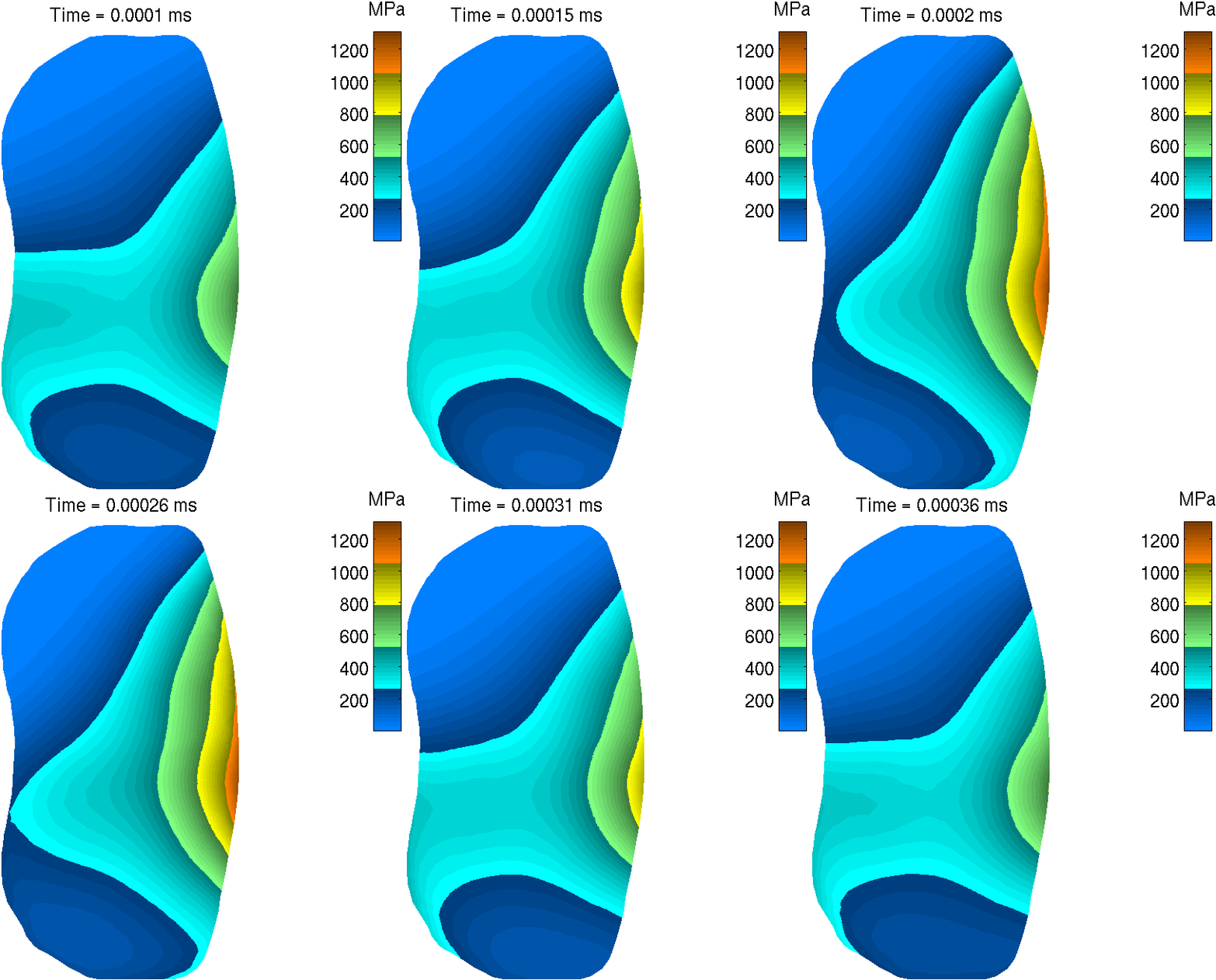
- Contact data visualization. Display contact related fields at integration points or nodes, from external code outputs, or computed in SDT. Animations and captures are also directly available.
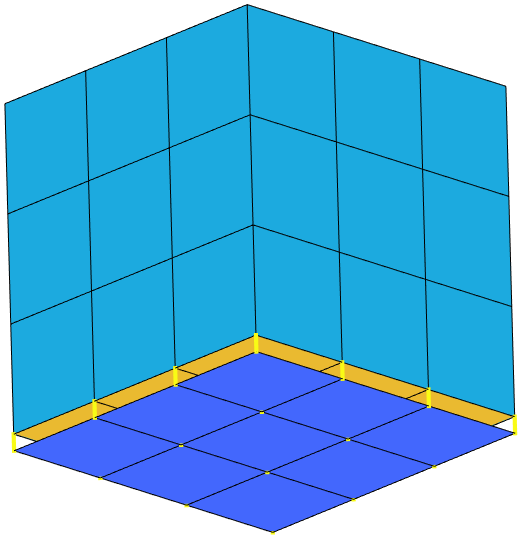
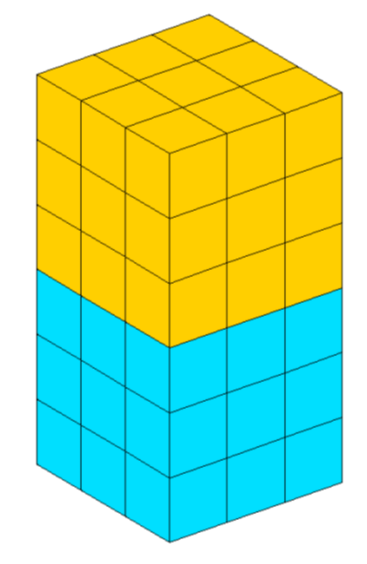
- Contact pair generation and formulation conversions MPC (Multiple Points Contraints) / CONTACT/ ZT (Zero Thickness Elements). Use initial definitions (imported from FEM or not) to reset an alternative formulation. This allows for example assessing contact constraints induced by a tied or glued constraint. You can also switch to zero thickness formulations for ease of use, or linearize a contact interaction.
- Pressure estimation from displacement fields. Contact output often depends on formulations and accuracy between what the (external?) solver computed and how it was post-treated. The contact module provides an original way of estimating pressures directly from displacement fields. Accuracy and smoothing are subsequently improved as usual solver global convergence is generally tested against the displacement fields.